
WELCOME BONUS 300%
UP TO €2000 + 100
FREE SPINS
UP TO €2000 + 100
FREE SPINS
Home → Blackjack
Blackjack at Spins Only: Variants, Rules and Payouts
Register Late Surrender correctly in three steps
Late Surrender reduces the house edge by 0.08 percentage points for players who execute it after the dealer checks for Blackjack. This specific rule modification allows you to forfeit half your stake when holding a weak hand against a strong dealer up-card. The surrender option returns exactly 50% of your original wager, preserving capital that would otherwise be lost in a standard loss scenario.
Players must verify that the specific Blackjack variant supports this rule before attempting the move, as Early Surrender is far rarer and more valuable. If the game does not explicitly list Late Surrender in its rules, you cannot execute this step, leaving you with no option but to play out the hand. Confirming this feature prevents unnecessary losses during unfavorable starting conditions at high-stakes tables.
The mathematical benefit of surrendering is significant for high rollers facing difficult hands like a hard 16 against a dealer 10. By taking the 50% refund instead of playing on, you effectively lower the long-term cost of playing compared to standard strategies. This disciplined approach aligns with the optimal play required to maintain the stated RTP figures for liberal rule sets.
Bonus conditions often exclude Blackjack completely
The 300% welcome bonus up to €2,000 plus 100 free spins comes with strict contribution rates that severely limit table game usage. Blackjack games contribute only 10% toward the bonus turnover requirement, meaning every €100 wagered counts as just €10 toward clearing the bonus funds. This low contribution rate forces players to place significantly larger bets to meet the same turnover targets compared to slot players.
High rollers seeking to clear the bonus using live dealer options face even greater hurdles due to the specific provider restrictions. Games like Quantum Blackjack Plus Live from Playtech or Lightning Blackjack from Evolution are subject to these same 10% contribution limits. Consequently, wagering €5,000 on these tables only generates €500 in effective turnover, requiring massive bankrolls to satisfy the terms efficiently.
The disparity between slot contributions and table game contributions creates a substantial barrier for players wishing to utilize their entire bonus amount. Since slots contribute 100%, players must balance their strategy carefully to avoid violating wagering requirements while trying to maximize value. Understanding these exclusionary mechanics is crucial for managing risk when attempting to convert bonus funds into withdrawable cash through table games.
Why Loss Progression Quickly Reaches Table Limit
Quantum Blackjack Plus Live imposes a maximum bet limit of 5,000 EUR per round, which caps the potential exposure for high rollers significantly. When employing aggressive loss progression systems like Martingale, doubling stakes after each loss quickly approaches this ceiling within a short number of consecutive defeats. A sequence of six losses starting from a base bet can easily breach the 5,000 EUR threshold, preventing further doubling actions.
Evolution's Lightning Blackjack operates under a stricter constraint with a maximum stake of 2,500 EUR, accelerating the reach of betting limits during downturns. Players relying on progressive betting strategies will find their ability to recover losses curtailed much earlier than in standard variants without such low caps. The limited range restricts the effectiveness of recovery systems, forcing adherence to flat betting or conservative progression methods to stay within bounds.
The presence of quantum multipliers up to 1,000x on three-card combinations adds volatility but does not alter the fundamental table limits governing stake sizes. While these multipliers offer occasional large payouts, they do not extend the maximum allowable bet for subsequent rounds after a loss. High rollers must therefore manage their bankroll carefully, recognizing that the table limit acts as a hard stop for any progressive staking plan.
What a Natural Blackjack Practically Pays Out
A natural Blackjack typically pays out at odds of 3:2, meaning a winning hand yields 1.5 times the original wager amount immediately. For instance, a successful bet of 100 EUR results in a total return of 150 EUR, including the initial stake returned separately. This standard payout structure is essential for maintaining the theoretical return to player percentages observed in liberal rule variants.
However, some variants may offer reduced payouts of 6:5, which drastically alters the expected value for every winning natural hand. In this scenario, the same 100 EUR bet would only return 120 EUR, effectively reducing the profit margin by 30 EUR per win. This reduction significantly impacts the overall house edge, making such variants less favorable for strategic players seeking optimal returns.
The difference between 3:2 and 6:5 payouts translates to an additional 1.39 percentage points in favor of the casino for the latter. This mathematical disadvantage is stronger than most other rule changes, emphasizing the importance of selecting games with traditional 3:2 payouts. High rollers should verify the payout structure before playing to ensure they are not inadvertently accepting inferior odds on their winning hands.
Side Bets don't count towards bonus turnover
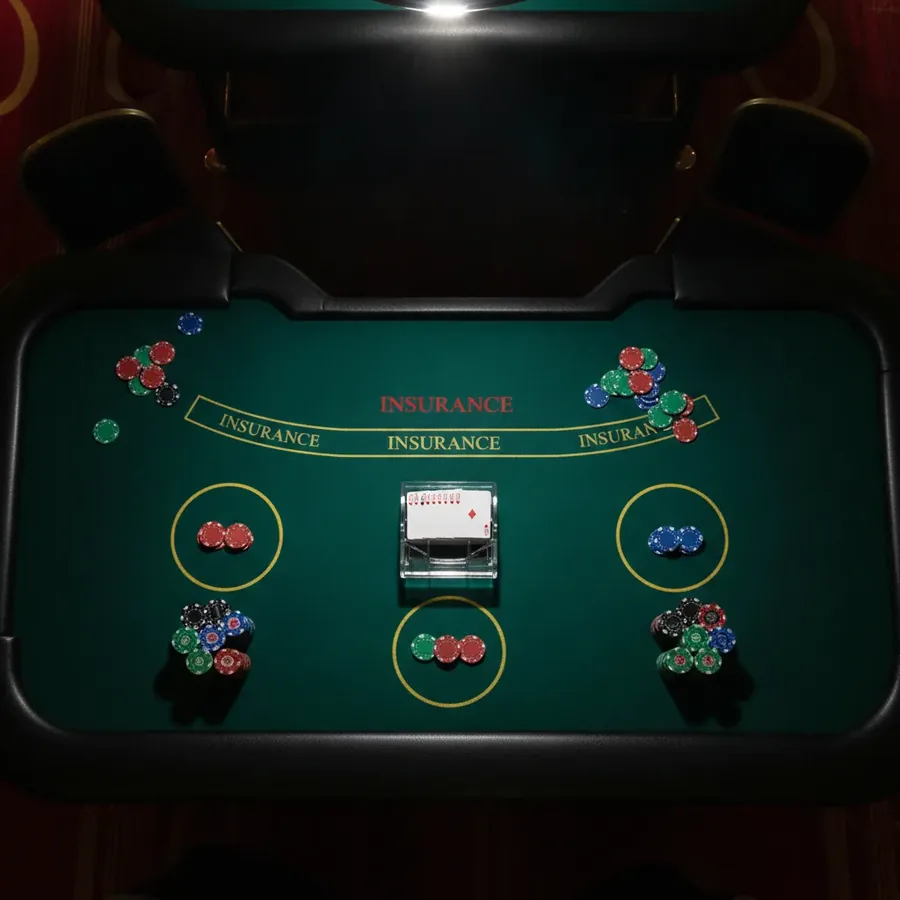
Insurance wagers represent a side bet that pays out at 2:1 odds when the dealer reveals an Ace showing in their up card. These bets are entirely separate from the main game action and contribute nothing toward the wagering requirements of the welcome bonus promotion. Players placing insurance bets increase their total exposure without advancing their progress toward clearing the mandatory turnover thresholds set by the casino.
The house edge for Insurance bets stands at 7.47% for six to eight deck games, making them highly unfavorable for long-term profitability. Although the 2:1 payout seems attractive, the statistical probability ensures that the casino retains a significant portion of these wagers over time. Relying on such bets to generate turnover is mathematically unsound and financially detrimental to the player's overall bonus strategy.
Blackjack Party from Evolution offers a lively atmosphere but maintains the same exclusion rules for side bets regarding bonus qualification. Any auxiliary wagers placed alongside the main hand are ignored by the system when calculating progress toward the 300% bonus release. Focusing solely on primary hand outcomes ensures accurate tracking of eligible turnover while avoiding wasted expenditure on non-contributing bets.
Blackjack variants at a glance
| Variant | Payout | House edge | Rule | Bet range |
|---|---|---|---|---|
| Blackjack Auszahlung 6:5 statt 3:2 (6 Decks) | 98.15% | 1.85% | Ersatz von 3:2 durch 6:5 fügt exakt +1.39 Prozentpunkte zum Vorteil des Casinos hinzu – stärker als jede andere Regeländerung. Bei $10 Einsatz zahlt Blackjack $12 statt $15. | Blackjack 6:5, Gewinn 1:1 |
| Blackjack Split / Double / H17 – Regel-Effekte | n.a. (Regel-Modifikatoren) | H17 +0.22 Prozentpunkte; RSA −0.08 Prozentpunkte; DAS −0.14 Prozentpunkte | Dealer Hits Soft 17 verschlechtert RTP um 0.22 Prozentpunkte; Resplit Aces verbessert um 0.08 Prozentpunkte; Double After Split verbessert um ca. 0.14 Prozentpunkte; 6 Decks statt 8 – ca. 0.02 Prozentpunkte. | Double – Einsatz ×2 mit einer Karte; Split – bis 4 Hände; Ass-Split meist mit einer Karte. |
| Blackjack Ein Deck, klassische Regeln, 3:2 | 99.85% | 0.15% | Weniger Decks = niedrigerer Vorteil; ein Deck gibt ca. −0.48 Prozentpunkte gegenüber 8 Decks. Oft durch 6:5 Auszahlung kompensiert. | Blackjack 3:2, Gewinn 1:1 |
| Blackjack Liberal Vegas Strip (liberale Regeln, 3:2) | 99.72% | 0.28% | Günstigste Regelkombination: S17 + DAS + Resplit + Late Surrender. Standardabweichung 1,15 | Blackjack 3:2, Gewinn 1:1 |
| Blackjack Insurance / Versicherung (6–8 Decks) | 92.53% | 7.47% | Separate Nebenwette bis 50% der Hauptwette, wenn der Dealer ein Ass hat. Basisstrategie schreibt IMMER Ablehnung vor (außer Karten zählen bei True Count ≥ +3). Bei einem Deck Vorteil ≈ 5.88% | Insurance 2:1 |
| Blackjack Surrender (Late Surrender) – Regel-Effekt | n.a. (Regel-Modifikator) | −0.08 Prozentpunkte | Spieler gibt Hand nach Dealer-Blackjack-Prüfung auf, verliert die Hälfte des Einsatzes. Verbessert RTP um ca. 0.08 Prozentpunkte. Early Surrender ist wesentlich wertvoller (bis −0.6 Prozentpunkte), aber extrem selten. | Rückzahlung 50% des Einsatzes |
How long does a Live Blackjack round take?
Quantum Blackjack Plus by Playtech accommodates bets ranging from 1 to 5,000 EUR, offering a high-stakes environment for serious players. The game features Quantum Multipliers that can reach up to 1,000x on three-card combinations totaling 21 points. This structure allows high rollers to secure massive payouts on single hands without extending the session duration.
Lightning Blackjack from Evolution operates with a lower stake limit of 1 to 2,500 EUR but introduces Lightning Multipliers up to 25x. These multipliers apply only to winning hands, creating volatile outcomes that appeal to risk-tolerant investors. The provider supports unlimited players, ensuring continuous action without waiting for seats to clear.
Blackjack Party also by Evolution caps bets at 1,000 EUR and focuses on entertainment with two moderators. While the financial ceiling is lower than the Quantum variant, the live interaction adds a layer of engagement for high rollers seeking social validation. The standard round duration remains consistent across all three providers, typically lasting under two minutes per deal.
Step-by-step Split at the Live Table
Players may split pairs into up to four separate hands, doubling the initial wager for each new stack. This rule significantly increases the total exposure per round, allowing high rollers to amplify their stakes on favorable cards. The option to double down after splitting further expands potential returns on these divided positions.
Resplitting Aces is generally permitted, though usually restricted to receiving only one additional card per Ace. This limitation reduces the volatility compared to splitting other pairs, as the probability of improving a hand drops sharply. High rollers must weigh this constraint against the base house edge when deciding whether to divide their aces.
Doubling down is allowed on any two-card hand, including those formed after a split, provided the table rules permit it. This flexibility enables strategic adjustments mid-round, particularly when the dealer shows a weak upcard. The ability to maximize wagers on strong starting hands like 10-2 or 9-3 is critical for optimal bankroll management.
Error insurance: 7 percent additional house edge
Blackjack Insurance is a side bet costing up to 50% of the main wager, offered when the dealer shows an Ace. It pays 2:1 if the dealer has a ten-value hole card, effectively protecting the original bet from a push. However, this protection comes at a steep cost to the player's long-term expected value.
The house edge for this specific side bet stands at 7.47%, which is drastically higher than the base game. Even with six to eight decks, the statistical disadvantage makes this wager unfavorable for skilled players. Basic strategy dictates always rejecting insurance unless the true count reaches +3 or higher through card counting.
For a single-deck game, the insurance edge rises to approximately 5.88%, making it even less attractive. High rollers relying on advanced strategies must avoid this trap to maintain a viable return rate. Accepting insurance unnecessarily erodes profits faster than any other common mistake at the table.
No Double Down on three cards
Standard blackjack rules often allow doubling down on two cards, but some variants restrict this to only the initial deal. At Spins Only, the specific table rules do not explicitly list three-card doubling as a standard feature for most games. Players must verify the specific table limits before placing additional wagers on drawn cards.
Most high-limit tables focus on doubling after splits (DAS) rather than extending the option to three or more cards. This restriction limits the player's ability to capitalize on strong hands that require additional cards. The absence of this rule slightly increases the house edge compared to fully liberal variants.
High rollers should prioritize tables that offer DAS and resplitting to offset the lack of three-card doubling. These rules provide more opportunities to increase wagers during favorable counts. Understanding these nuances is essential for minimizing the overall house advantage in live dealer settings.
Surrender vs Playing Out on 16 vs 10
Late Surrender allows players to forfeit half their bet after the dealer checks for blackjack. This rule improves the RTP by approximately 0.08 percentage points, offering a small but valuable edge. It is particularly useful when holding a hard 16 against a dealer's 10.
Without surrender, playing out a 16 against a 10 results in a loss probability exceeding 60%. Early surrender, which permits quitting before the dealer checks, is far more valuable but extremely rare. Most live tables only offer late surrender, limiting the player's defensive options.
High rollers facing a 16 vs 10 situation should evaluate whether surrendering saves more money than playing the hand. The decision depends on the specific deck penetration and remaining card composition. Consistent use of surrender in these scenarios can significantly reduce long-term losses.
Bonus Lost Due to 10 Percent Contribution
The 300% welcome bonus up to €2,000 requires significant turnover because table games contribute only 10% to the wagering requirement. This low contribution rate means that every euro bet on blackjack or live tables counts as merely ten cents toward clearing the bonus funds. High rollers placing large bets on these games will find their progress toward unlocking the withdrawal of bonus winnings extremely slow compared to slot players.
In contrast, slots contribute 100% to the wagering requirement, allowing players to clear the bonus much faster through high-variance spin outcomes. The disparity between the 10% table contribution and the 100% slot contribution creates a strategic dilemma for those seeking to maximize value from the €2,000 cap. Players must calculate whether the slower progression on tables is offset by the lower house edge found in specific blackjack variants like the three-deck option.
Unlimited seats via a split dealer hand
Lightning Blackjack by Evolution supports an unlimited number of players simultaneously due to its digital interface architecture and flexible dealer hand mechanics. This structural advantage allows high-volume bettors to join the action without waiting for a physical seat to become available at a crowded table. The game utilizes Lightning Multipliers up to 25x on winning hands, adding excitement to the standard rules while accommodating massive player concurrency.
Quantum Blackjack Plus Live by Playtech operates with a similar capacity but introduces Quantum Multipliers up to 1,000x on three-card twenty-one combinations. These multipliers apply strictly to specific card patterns rather than general hand wins, creating distinct volatility profiles for participants betting within the one to five thousand euro range. The split dealer hand mechanism ensures that the game flow remains uninterrupted regardless of how many concurrent users are actively participating in the round.
Highroller from 500 EUR per hand
Quantum Blackjack Plus Live by Playtech accommodates serious bankrolls with a maximum bet limit set at 5,000 EUR per single hand. This high ceiling allows dedicated players to engage in substantial wagers that exceed the limits found in most standard online blackjack tables. The game retains an RTP of 99.57% when optimal strategy is employed, ensuring that high-stakes decisions remain mathematically favorable over the long term despite the elevated variance.
Lightning Blackjack by Evolution offers a slightly lower maximum stake of 2,500 EUR per hand, which still caters to upper-tier betting preferences effectively. While the entry point starts at just one euro, the upper bound provides sufficient room for progressive betting strategies utilized by experienced gamblers. The inclusion of Lightning Multipliers up to 25x on winning hands adds a layer of potential payout amplification that appeals to those chasing significant returns on larger base bets.
How much time is left for the decision?
Players must rely on established habits to execute hits, stands, doubles, or splits before the system automatically makes a decision based on basic strategy defaults. This automated fallback ensures that the game proceeds smoothly even if a participant hesitates, preventing delays that could disrupt the experience for other concurrent users at the virtual table.
Blackjack Payout 3:2 Explained in Detail
Traditional blackjack pays natural hands at a ratio of 3:2, meaning a ten euro bet yields fifteen euros in profit upon achieving a twenty-one with two cards. This generous payout structure is fundamental to maintaining a low house edge, particularly in single-deck games where the advantage sits at just 0.15%. Switching to a 6:5 payout reduces this return significantly, costing players approximately 1.39 percentage points in expected value compared to the traditional three-to-two format.
Contact
Live - online chat
Banking









Providers












Onlyspins Casino 2026